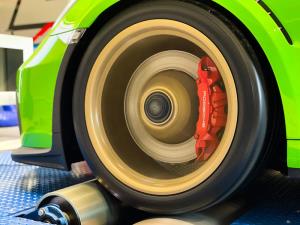
Professional services for the remapping and tuning of automotive electronic control units with certified dynamometer.
The processing of electronic control units is one of the most requested interventions by automotive enthusiasts who want to optimize the performance of their vehicle by increasing power, torque and engine response. Professional remapping services use advanced instrumentation and certified technical skills to modify the management parameters of the ECU (Engine Control Unit) ensuring measurable, safe and long-lasting results. The dynamometric test bench is a fundamental distinctive element that separates serious professionals from those who work improvising: this equipment allows you to measure with mathematical precision the power and torque of the engine before and after the intervention, verify the vital parameters during processing, validate the mapping in controlled and repeatable conditions. The remapping on the bench ensures that every modification is scientifically tested, that the mechanical limits of the engine are respected, that temperatures, pressures and air-fuel ratios remain within safe parameters. The specialized centers combine technical expertise, databases of tested mappings, original software, advanced diagnostics to offer services that truly transform the dynamic characteristics of the vehicle while maintaining reliability and preserving the longevity of the engine through professional approaches that prioritize quality and safety over unrealistic promises of excessive performance increases. 🔧 ECU remapping and the types of intervention on the engine control unit.
The processing of the electronic control unit is divided into different methodologies that vary in invasiveness, reversibility and potential for performance increase. OBD remapping is the most widespread and least invasive technique: through the vehicle's diagnostic port you can access the ECU, read the original file that is saved as a backup, modify the software according to studied parameters, and upload the new mapping. Stage 1 remapping is the basic level that can be performed on vehicles with completely standard components, generally increasing power by 15-25% on turbo petrol engines and 20-35% on turbodiesel. Stage 2 remapping requires hardware upgrades such as downpipe, sports air filter, oversized intercooler to support higher increments. The Stage 3 remapping includes substantial changes to the turbocharger, enhanced injectors, increased fuel pump. The additional control units are interposed between the sensors and the original ECU, modifying the signals in real time without altering the standard software. The stand-alone ECUs completely replace the original ECU, offering total control but requiring custom wiring and complex configuration mainly suitable for extreme racing preparations.
👉 Do's and useful tips: Always start with a Stage 1 remapping on a fully production vehicle to evaluate the results before investing in expensive hardware upgrades, verifying that the increase obtained meets expectations without compromising daily reliability. 📊 The dynamometer test bench and the importance of objective measurement.
The test bench or dynamometer represents the tool that differentiates serious professionals from improvisers in the remapping sector. This equipment measures power and torque delivered from the engine to the drive wheels with scientific precision through calibrated rollers that simulate road resistance. The most popular roller dynos allow testing on front, rear or all-wheel drive vehicles with load capacities up to 1000-1500 hp. During the dynamometric test, the vehicle is constrained, brought to operating temperature, progressively accelerated to maximum speed while the dyno records instantaneous data of power, torque, air-fuel ratio, temperatures, pressures. The graphs generated visualize the power and torque curves over the entire range of use of the engine, allowing you to identify power delivery gaps, electronic limitations, mechanical problems. The comparison between pre- and post-processing measurement objectively documents the results obtained by eliminating unverifiable statements. The bench also allows you to optimize the mapping iteratively: a calibration is uploaded, tested, data analyzed, parameters are modified, and retested until the performance goal is reached within mechanical safety margins.
👉 What to do and useful tips: always demand a printout of the dynamometric chart before and after processing as objective documentation of the results obtained, being wary of those who promise specific increases without scientific measurement that includes them. ⚙️ The parameters can be changed in the ECU mapping.
Professional remapping acts on numerous management parameters that the ECU uses to control engine operation. The torque limitation imposed by the manufacturer to preserve the gearbox and transmission is modified allowing the engine to express its real potential. The turbo pressure is increased within safe mechanical limits of the compressor by increasing the compressed air fed into the cylinders. Fuel injection times are optimized to take advantage of additional air while maintaining correct stoichiometric ratios. The ignition advance on petrol engines is calibrated to maximise efficiency by avoiding harmful detonations. The speed limiter can be raised when mechanics and valves allow it. Diesel particulate filters and EGR valves can be deactivated when permitted by eliminating performance limitations, although this practice raises legal questions about emissions. The throttle response is made more immediate by eliminating delays in the translation of pedal pressure into throttle opening. The flex mappings allow you to load multiple calibrations that can be selected for different uses: economical for everyday use, sporty for maximum performance, limited valet mode for when the vehicle is entrusted to others.
👉 What to do and useful tips: ask the tuner for a detailed explanation of which parameters will be changed and to what extent, understanding the implications of each change on the performance, consumption, emissions and mechanical stresses of the engine. 🚗 The concrete benefits of professional remapping on a test bench.
The advantages of professional processing carried out with a dynamometer go beyond the simple increase in horsepower declared in the catalogue. The increase in power and torque translates into faster acceleration, overtaking performed with greater safety, recovery at low upper revs particularly appreciable in everyday use. The throttle response becomes more immediate and linear, eliminating the typical power delivery holes present on the standard conservative mappings. In turbodiesel engines, the increase in torque at low revs significantly improves elasticity, making driving less tiring in the city and on extra-urban routes. Fuel consumption, contrary to what one might think, remains similar or even slightly improved with normal driving since the greater torque available allows higher gears to be maintained at lower revs. Overall drivability improves with smoother and more progressive delivery. Driving pleasure increases significantly, transforming even everyday vehicles into more rewarding cars to use. The ability to objectively verify results on the bench eliminates doubt and ensures that the investment has produced real and measurable improvements.
👉 What to do and useful tips: after remapping, drive normally for the first 100-200 km allowing the ECU to adapt to the new calibrations before fully exploiting the additional performance, ensuring stability of the self-learning parameters. 🔍 Preliminary diagnostics and verification of the condition of the vehicle.
Before proceeding with any processing, the professional centers perform complete diagnostics to verify that the vehicle is in suitable condition to support the performance increase. Reading errors by OBD tester reveals any previous problems on sensors, actuators, systems that must be solved in advance. Checking the status of critical components includes checking engine oil and level condition, air filter status, intake and exhaust pipe integrity, no oil or coolant leaks, proper cooling system operation. The compression of the cylinders is tested to exclude excessive wear of segments, valves, cylinders that would compromise reliability with higher powers. The condition of the turbocharger is evaluated by verifying the absence of axial plays, oil leaks, abnormal noises. The clutch must be in good condition to transmit the increased torque without slipping. Serious centers refuse to develop vehicles with obvious mechanical problems, advising to solve the critical issues first, an approach that testifies to professionalism and honesty towards the customer.
👉 What to do and useful tips: before taking the vehicle for remapping, carry out a complete service with oil change, filters, spark plugs according to the manufacturer's deadlines, ensuring that the engine is in the best condition to support the processing. 💾 The reversibility of the intervention and the saving of the original file.
One of the fundamental advantages of OBD remapping lies in the complete reversibility of the intervention. Professional tuners read and save the original ECU file before any modification, keeping it in secure archives identified by the vehicle's chassis number. This backup copy allows you to restore the standard mapping at any time, bringing the vehicle back to its original condition: a useful operation before selling the car, to return to the warranty if still valid, for checks at the dealership, for special technical checks. The recovery process takes a few minutes by plugging the computer back into the OBD port and uploading the saved file. Some preparers provide a copy of the original file to the customer on digital support, allowing complete autonomy. The possibility of going back without traces is an important peace of mind for those who fear repercussions on the residual warranty or prefer to maintain the possibility of future choice. Additional ECUs offer even more immediate reversibility by simply disconnecting them electrically, while stand-alone ECUs require reinstallation of the original ECU with a more complex operation.
👉 What to do and useful tips: always request a copy of the original file on a USB stick to keep personally as an additional security, at the same time verifying that the preparer has redundant backup systems so as not to lose the saved files. 🛡️ The guarantees offered and the responsibilities of the professional trainer.
Professional processing centres are characterised by the guarantees they offer on the work carried out. The warranty on remapping generally covers any malfunctions caused directly by processing for periods ranging from 6 months to 2 years depending on the tuner. This coverage includes free restoration of the original mapping if required, correction of issues such as excessive smoke, engine light on, irregular operation attributable to calibration. Liability does not extend to mechanical damage caused by misuse, already worn components, inadequate post-processing maintenance. Serious trainers require the signature of a waiver that relieves them of responsibility for use in the race, hardware modifications carried out elsewhere, failure to comply with maintenance instructions. Some offer ongoing assistance with free mapping updates, telephone support for problems, discounts on subsequent processing. The presence of professional insurance further protects customers and preparers from disputes. Verified reviews and the history of the business are reliable indicators of operational seriousness.
👉 What to do and useful tips: read the warranty conditions carefully before signing contracts or releases, checking exactly what is covered, for how long and what behaviors invalidate the warranty offered by the tuner. 🏁 The differences between road remapping and racing preparations.
The needs of those who use the vehicle on a daily basis differ radically from those of drivers who take it exclusively to the track. A road remapping favors a balance between increased performance, long-lasting reliability, reasonable consumption, emissions within legal limits. The calibrations maintain mechanical safety margins to ensure longevity, voluntarily limit maximum pressures and temperatures, preserve components such as turbo, clutch, gearbox. On the contrary, racing preparations maximize performance without compromise: aggressive mappings push the engine to structural limits, high turbo pressures, lean air-fuel ratios to the limit of detonation, complete elimination of limiters. These setups require very frequent maintenance, consume high-octane fuel, oil in quantity, are not very usable in urban traffic, and have a limited lifespan. Some preparations offer multiple stored mappings that allow you to switch from conservative to extreme sports configuration via selector, combining versatility for everyday use and maximum performance when desired. The choice depends on the prevailing actual use of the vehicle and the willingness to accept compromises on reliability and maintenance costs.
👉 What to do and useful tips: be honest with the tuner about the real use of the vehicle allowing him to calibrate the appropriate mapping: promising racing uses when the car does 30,000 km per year in the city leads to unsuitable calibrations that cause problems and dissatisfaction. 💰 The costs of processing services and value for money.
The prices of remapping vary significantly depending on the complexity of the vehicle, the type of intervention, the reputation of the tuner, and the presence of the test bench. A Stage 1 remapping via OBD on common cars generally costs 400-700 euros. German premium vehicles with complex software protections require 600-1000 euros. The additional control units have prices from 400 to over 2000 euros depending on the brand and functionality. The separate dynamometer test costs 80-150 euros but is often included or discounted when combined with remapping. Stand-alone ECUs for extreme preparations start at 1500 euros for hardware only, excluding installation and mapping. Upgrades to existing mappings generally cost 100-200 euros. Test bench centers charge slightly higher rates justified by the investment in equipment and the verifiable quality of service. Be wary of excessively low prices that often hide the use of pirated software, untested generic mappings, absence of guarantees. The quality-price ratio is evaluated by considering the increase in performance obtained, reliability over time, after-sales assistance, possibility of reversibility, documentation provided.
👉 What to do and useful tips: do not choose the tuner exclusively on the basis of the lowest price but evaluate technical competence, presence of test bench, verified reviews, transparency in communications since a job done badly can cause expensive mechanical damage much higher than the initial savings. ❓ F.A.Q. - Frequently asked questions about the processing of car control units on a test bench.
🔸 Does ECU remapping damage the engine?
A remapping carried out professionally by competent technicians, which respects the mechanical safety margins of the engine and is accompanied by adequate maintenance, should not cause reliability problems. The risk increases with excessively pushed mappings on engines that are already worn out or when maintenance is neglected. It is essential to use high quality fuels and respect service deadlines.
🔸 How much does the horsepower really increase with a Stage 1 remap?
On modern turbo petrol engines, increases of 15-25% in power and 25-35% in torque are achieved. Turbodiesels gain an average of 20-35% in power and 30-45% in torque. Naturally aspirated engines have much more limited margins, generally 5-12% increase. The exact results depend on the specific model, engine status, mapping quality. The test bench objectively documents the gains obtained.
🔸 Does remapping void the manufacturer's warranty?
Theoretically, yes, since it modifies the operating parameters provided by the manufacturer. In practice, many OBD remappings do not leave obvious traces and dealerships hardly detect them if not specifically searched. Full reversibility allows you to restore the original mapping before warranty work. Some manufacturers have systems that count accesses to the ECU making changes detectable.
🔸 What exactly does Stage 1, Stage 2, Stage 3 mean?
Stage 1 indicates remapping to fully stock vehicle with no hardware modifications. Stage 2 requires upgrades such as sports exhaust, air filter, intercooler to support higher increments. Stage 3 includes substantial changes such as increased turbo, enhanced injectors, reinforced fuel pump. Each subsequent stage offers increasing performance but requires progressively greater hardware investments.
🔸 Is OBD remapping or add-on ECU better?
The remapping via OBD directly modifies the original software offering perfect integration, while the additional control units are interposed between the sensors and the ECU. Remapping generally offers superior and more linear results but is less instantaneously reversible. Additional control units are easily removed but can create conflicts with the original management. The choice depends on specific priorities and vehicle type.
🔸 Does fuel consumption increase after remapping?
It depends on the driving style. By constantly exploiting the additional power, consumption inevitably increases. Driving normally, many experience similar or slightly lower fuel consumption thanks to the higher torque at low revs, which allows them to use higher gears at lower revs. The difference rarely exceeds 5-10% in either direction compared to the original consumption.
🔸 Is the test bench really necessary or is it just marketing?
The test bench is a fundamental tool for objectively measuring results, optimizing mapping iteratively by verifying vital parameters, and documenting increases obtained. Without a desk, we proceed 'blindly' based on subjective sensations. Serious trainers invest tens of thousands of euros in benches precisely because they are essential for professional work. It is not marketing but a quality requirement.
🔸 Can I remap a car with high mileage?
It depends on the actual state of the motor. Vehicles with 200,000+ km but well maintained with good compression can be processed. Worn engines with compression losses, high oil consumption, damaged components risk failure with higher stresses. Serious preliminary diagnostics include compression tests and general condition verification advising whether to proceed or not.
🔸 Does remapping require special fuels or additives?
Moderate Stage 1 remapping generally does not require special fuels, and always use 98 octane gasoline or quality diesel from reputable distributors. More advanced preparations may require 100+ octane gasoline for competition or specific additives. The preparer must clearly specify fuel requirements and consequences of using gasoline at a lower octane rating than recommended.
🔸 How do I choose a reliable preparer for remapping?
Check for the presence of your own test bench, read verified reviews online, ask to view previous works with dynamometer graphs, verify the use of original non-pirated software, check transparency on the guarantees offered, be wary of promises of unrealistic increases. Historical tuners with years of activity and satisfied customers are generally a safer choice than new openings without history.
The processing of electronic control units carried out with professional methods on a dynamometer test bench represents the most serious and reliable approach to optimize the performance of a vehicle by ensuring measurable results, operational safety and longevity of the engine. The difference between a professional intervention and an approximate one lies in the technical competence of the preparer, in the use of certified instrumentation, in the ability to test and validate each modification scientifically through objective measurements. The test bench is tangible evidence of the investment in quality: it allows you to document real increases, optimize calibrations iteratively, verify that vital parameters remain within safe margins. Relying on specialized centers with consolidated experience, databases of tested mappings, operational transparency ensures that the investment produces concrete benefits without compromising reliability. Youritaly.it offers visibility to centers specialized in ECU processing that operate with certified dynamometers, allowing automotive enthusiasts to identify qualified professionals capable of transforming the performance of their vehicle through safe, reversible and documented interventions that combine mechanical passion and technical rigor in the tradition of Italian excellence in the automotive preparation sector.