Best Chip Tuning and Electronic and Mechanical Optimization of Sports Car Engines

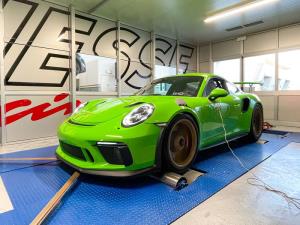

Discover the best chip tuning and electronic and mechanical optimization services for sports car engines.
Relying on the best chip tuning and electronic and mechanical optimization services for sports car engines means choosing qualified professionals who can increase vehicle performance through targeted interventions on electronic engine management and complementary hardware modifications. Chip tuning, or ECU remapping, consists of modifying the ECU (Engine Control Unit) software to optimize parameters such as fuel injection mapping, turbo boost pressure, ignition advance, torque and rev limiters, delivery curves and other values that affect power, torque and engine efficiency. For sports cars, these interventions make it possible to unleash the potential hidden by manufacturers who often limit performance for reasons of marketing, homologation consumption, large-scale reliability or to differentiate range models. Mechanical optimization complements electronic optimization through upgrades of components such as larger turbines, more efficient intercoolers, sports exhausts, high-performance intake systems, enhanced injectors and modifications that support the increase in power while ensuring reliability. Specialized centers have roller test benches, professional diagnostic instrumentation, certified mapping software, and experienced mechanics who understand the specific characteristics of each engine.
⚡ How the engine ECU chip tuning works.
Chip tuning modifies the software in the engine ECU through different methods. The most common technique is OBD (On-Board Diagnostics) remapping, which uses the vehicle's diagnostic socket to access the ECU, read the original file, edit it and upload it again. This non-invasive method preserves the original control unit and allows a complete factory reset. For protected control units, it may be necessary to physically open the ECU and access the EPROM memory by direct reading on the bench. Modified parameters include three-dimensional fuel injection maps that adjust fuel quantities based on rpm, load and temperature, ignition advance maps to optimize combustion, increased turbo pressure limitations for greater turbocharging, torque and power limiters removed or raised, and modified delivery curves for more aggressive response. The process requires deep expertise in the architecture of the specific engine: inappropriate mappings cause detonations, overheating, mechanical damage or malfunctions. Professional tuners test the modifications on a dynamometer, monitoring parameters such as exhaust gas temperature, air-fuel ratio, boost and knock pressure to ensure safety.
👉 What to do and useful tips: be wary of excessively cheap chip tuning services that use generic maps downloaded from the internet, favoring centers that develop custom mappings tested on a test bench.
📈 Achievable increases in power and torque.
The performance gains that can be achieved through chip tuning vary significantly depending on the type of engine and the level of processing. Turbo petrol engines offer important margins: increases of 20-40% in power and 30-50% in torque are common on modern downsizing engines where manufacturers have conservative margins. Engines such as 2.0 TFSI, BMW B58, Mercedes M274 respond excellently. The turbocharged diesels show even greater increases in torque, with peaks of 40-60% while maintaining reasonable fuel consumption. Naturally aspirated engines benefit less from chip tuning alone (5-15% typically), requiring substantial mechanical modifications for significant gains. For already high-performance sports cars such as Porsche 911 Turbo, BMW M, Mercedes AMG, the percentage increases are smaller but significant in absolute values. Concrete examples: a BMW M2 Competition with 410 hp can reach 480-500 hp with stage 1, a 400 hp Audi RS3 can reach 480-520 hp, a Porsche 911 Turbo with 580 hp can touch 650-700 hp. It is essential to balance increases with reliability: excessive margins stress mechanical components, shortening their life.
👉 Do's and useful tips: Define realistic performance increase goals by discussing safe margins for your specific engine with the tuner, avoiding extreme tuning that compromises day-to-day reliability.
🔧 Processing stage: differences and necessary components.
The elaborations are classified by progressive stages that indicate the level of modification. Stage 1 consists only of ECU remapping without hardware changes, taking advantage of the margins of the standard configuration. It offers the best cost-benefit ratio and maintains high reliability. Stage 2 requires upgrades of some components: decat or catless sports exhaust to reduce back pressure, increased downpipe, sports air filter or high-flow intake system, more efficient intercooler to maintain low intake temperatures under load. Stage 3 includes an oversized or hybrid turbocharger, high-flow injectors, an enhanced fuel pump, a reinforced clutch to manage increased torque, and possible reinforcement of internal engine components. Extreme stages include forged pistons, reinforced connecting rods, sports camshafts, machined cylinder heads, complete racing exhaust systems. Each stage requires specific mapping optimized for hardware changes. For valuable sports cars, it is advisable to proceed gradually by testing reliability before making larger investments. Some changes impact homologations and emissions, check regulatory compliance.
👉 Do's and useful tips: Start with a Stage 1 to evaluate performance and reliability gains before investing in hardware modifications that are more expensive than higher stages.
🛠️ Mechanical changes complementary to chip tuning.
Mechanical changes optimize efficiency and support remapping power gains. A sports exhaust system reduces back pressure while increasing volumetric efficiency: oversized downpipes eliminate pre-turbo restrictions, sports manifolds optimize gas evacuation, high-flow tailpipes reduce pressure drops. The elimination or replacement of the catalytic converter with 200-cell sports versions further frees up the flow, but impacts emissions and homologation. Upgrading the intercooler with larger or more efficient units maintains optimal intake temperatures by preventing heat soak power loss during heavy use. High-flow intake systems with optimized sports filters or airboxes reduce entry restrictions. Oversized or hybrid turbines increase the potential for supercharging: larger turbos offer greater maximum flow but can penalize response at low revs, hybrids maintain original dimensions with enhanced blades and compressors. High-flow injectors become necessary beyond certain power levels when the stock ones become saturated. Reinforced or bi-disc clutches handle high torques. Water intercoolers offer superior efficiency in small spaces.
👉 What to do and useful tips: invest primarily in sports exhaust and efficient intercooler, components that support performance increases while also improving the thermal reliability of the tuned engine.
📊 Dynamometric test bench and performance tests.
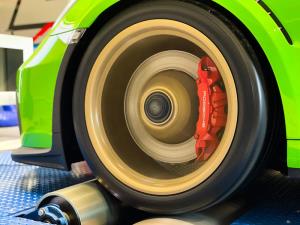
The dynamometric test bench, or dyno, is the essential tool for the development and verification of processing. Roller dynos measure power and torque directly at the drive wheels, simulating real driving conditions. Professional systems such as Dynojet, Maha or Bosch monitor applied load, speed, temperature and humidity, providing graphs of power and torque over the entire rpm range. During the development of the mapping, the tuner performs repeated runs by monitoring critical parameters through dataloggers connected to the ECU: air-fuel ratio (AFR), exhaust gas temperatures (EGT), boost pressure, ignition advance, knock events. This allows problem areas to be identified and optimized progressively. The before/after comparison quantifies exactly the gains obtained. For sports cars, some dynos allow simulation of specific conditions such as altitude, temperature or downforce. The road tests complete the validation by verifying real performance, acceleration times and dynamic behavior. Serious centers provide dyno certificates that document the performance achieved. Caution: Power to the wheels is lower than to the engine due to transmission losses (10-20% typically).
👉 Do's and useful tips: Always ask for a test bench certificate before and after processing to document actual increases and verify that the results match the agreed expectations.
🏁 Chip tuning for specific sports car brands.
Several manufacturers require specific approaches to chip tuning given the peculiar architecture of their electronic systems. The (Volkswagen Audi Group) groups use Bosch control units with protocols accessible via OBD, allowing relatively simple remapping on models such as Golf R, Audi S/RS, Porsche turbo. BMWs use Bosch or Siemens control units that require specialized software; N54, N55, B58, S55, S63 engines respond excellently. Mercedes-AMGs with Bosch MED control units offer significant margins on M133, M139, M177, M178 engines. Porsches have advanced software protections requiring high skills; Boxer and flat-six turbo engines offer substantial increases. Ferraris and Lamborghinis impose greater challenges with protected Bosch MED ECUs and complex systems that require bench reading; The processing risks compromising guarantees and official assistance. McLarens use highly protected Ricardo control units. Japanese cars such as Nissan GT-R, Subaru WRX STI, Mitsubishi Evo respond well with specialized tuners. Every brand requires dedicated software, specific databases and unique skills.
👉 Do's and useful tips: Choose tuners who specialize in your specific make and model, checking previous work portfolios on similar cars to ensure specific expertise.
⚖️ Reliability and warranty after chip tuning.
The impact of chip tuning on reliability depends on the quality of the processing and the margins applied. Conservative remapping of Stage 1 within safe margins generally does not compromise reliability when performed professionally, and can even improve drivability and efficiency. Aggressive or poorly executed tuning causes problems: detonation due to excessive advance damages pistons and rings, too lean mixture overheats components, excessive boost stresses turbine and head gasket, high torque clutch and transmission wear. The manufacturer's warranty is technically invalidated by unauthorized modifications, although in practice some dealers tolerate light tuning if not related to failures. Professional tuners offer their own warranties on the work, typically 12-24 months, covering direct damage from faulty mapping but not accelerated wear and tear of mechanical components. Maintenance becomes crucial: higher quality oils, close changes, parameter monitoring, preventive checks. For valuable sports cars, consider specialized insurance that covers modified vehicles. Professionally documenting changes preserves resale value with enthusiasts.
👉 What to do and useful tips: always keep a copy of the original ECU file to be able to restore the stock configuration in case of need during the warranty period or before sale.
💶 Processing costs and value for money.
The costs of chip tuning vary according to the complexity of the work and the reputation of the center. A Stage 1 remapping via OBD on common engines costs approximately 400-800 euros at qualified centers. For premium sports cars or supercars with protected control units, prices rise to 1,000-2,500 euros considering reading on the bench and dedicated mapping development. The Stage 2 tuning adds up hardware costs: sports exhaust (800-3,000 euros), increased intercooler (500-1,500 euros), downpipe (400-1,200 euros), sports filter (100-500 euros), plus dedicated mapping (600-1,200 euros). Stage 3 with increased turbo require investments of 5,000 to 15,000 euros including components, labor and mapping. Extreme tuning on open engines reaches tens of thousands of euros. The test on a dynamometer costs 80-200 euros per session. Indirect costs must also be considered: increased fuel consumption, accelerated wear and tear, possible insurance adjustments. Value for money favors Stage 1 which offers 20-30% increments at fractions of the cost of higher internships. Be wary of offers below cost that hide generic maps or incompetence.
👉 What to do and useful tips: consider chip tuning an investment in the performance of your sports car, favoring quality and safety over economic savings that could cost you dearly in repairs.
📜 Legal aspects, homologation and revision.
The regulatory aspects of chip tuning have legal gray areas. In Italy, substantial changes to services should be communicated to the Land Transport Department for updating the registration certificate, a procedure rarely followed in practice. Modifications that alter pollutant emissions violate Euro regulations and can cause problems during periodic inspection, especially if accompanied by catalytic converter removal. Theoretically, tuned vehicles would have to undergo re-approval, an expensive and complex process that discourages legalization. In reality, electronic processing is difficult to detect during standard overhauls if standard physical configurations are maintained. The elimination of anti-pollution components is illegal and punishable. Insurance companies may deny coverage in the event of a claim if they discover undeclared changes. From a fiscal point of view, power increases should change the stamp duty class. The advice is to keep the possibility of restoring the original configuration and consult legal experts for specific situations. Some regions apply stricter controls than others.
👉 What to do and useful tips: always keep the original file of the control unit and check with your insurance company if performance changes require communication or policy adjustments.
🌐 Tuner and leading brand in the sector.
The chip tuning landscape includes numerous specialized operators recognized for their technical expertise. APR (USA) is the leader for with racing-proven developments. Revo (UK) offers complete solutions for premium brands with a global network of installers. Cobb Tuning dominates the Japanese segment with Accessport for Subaru, Nissan, Mazda. Dinan is a certified BMW specialist in the USA. Hennessey Performance operates on American and European supercars. Brabus and RennTech develop Mercedes-AMG. 9ff, TechArt and Gemballa focus on Porsche. Novitec deals with Ferrari, Lamborghini, Maserati. In Italy, centers such as Dbilas, Magneti Marelli racing division, MM-Tuning offer high skills. Professional software includes WinOLS, ECM Titanium, KESSv2 for read/write, CMD for advanced diagnostics. Hardware component brands such as Garrett, BorgWarner for turbo, Akrapovic, Remus for exhausts, Wagner for intercoolers complement processing. The choice of tuner should be based on specific specialization, verifiable references and investments in professional equipment.
👉 What to do and useful tips: check the tuner's certifications and partnerships with recognized software and hardware brands, indicators of professionalism and continuous updating on the latest technologies.
❓ F.A.Q. - Frequently asked questions about chip tuning and engine optimization of sports cars.
⚡ Does chip tuning damage the engine?
A professionally performed chip tuning within safe margins does not damage the engine. Problems arise with aggressive mappings beyond mechanical limits, generic maps downloaded online that have not been tested, or when worn components do not support increments. Qualified tuners develop bench-tested maps by monitoring critical parameters to ensure reliability. Thorough maintenance becomes even more important on tuned engines.
🔄 Is chip tuning reversible?
Yes, chip tuning via OBD is completely reversible. Professional tuners keep the original ECU file that can be reloaded at any time, restoring factory configuration. This is useful for warranty checks, vehicle sales, or simply returning to standard settings. Reversibility is one of the main advantages over permanent hardware changes.
📊 How much does consumption increase after chip tuning?
The increase in fuel consumption depends on the driving style. With moderate driving, fuel consumption can remain similar or even improve thanks to optimized torque curves that reduce the need for downshifting. By frequently exploiting the increased performance, consumption increases proportionally, typically by 10-20%. On diesel engines, moderate tuning can maintain or improve efficiency. The increase is less significant in constant motorway use.
🏎️ Can all cars be processed?
Technically almost all modern engines with electronic management can be remapped, but the margins vary enormously. Turbo engines offer more opportunities, naturally aspirated engines benefit less from remapping alone. Modern sports cars have sophisticated ECUs but also greater protections. Very old vehicles with primitive control units offer limited margins. Some engines have mechanical limitations that prevent substantial increases without costly hardware modifications.
🛡️ Does the manufacturer's warranty expire?
Formally, unauthorized modifications to the control unit will void the manufacturer's warranty. In practice, it depends on the dealer and the nature of the failure. If the modification is clearly related to the problem (e.g. piston melted by detonation), the warranty will be denied. For unrelated faults (e.g. body electrical problem), many dealers do not investigate ECU modifications. The reversibility of the chip tuning allows you to restore the original before warranty interventions.
💾 What happens in case of an official software update?
The manufacturer's official software updates override the custom mapping, bringing the ECU back to stock configuration. Before any work by the dealer that may involve ECU updates, it is advisable to restore the original file. After the update, you will need to remap the vehicle again. Some tuners develop maps that are compatible with specific software versions.
🔧 Do you need mandatory mechanical changes?
For Stage 1 (remapping only), mechanical changes are generally not mandatory, taking advantage of margins of the stock configuration. However, for increases of more than 20-30% or for engines that are already working at the limits, the following become advisable: sports exhaust to reduce back pressure, increased intercooler to manage temperatures, reinforced clutch for increased torque. Stage 2 and 3 necessarily require hardware upgrades to support target powers.
📍 How long does a remap take?
A Stage 1 remapping via OBD typically takes 2-4 hours including reading the original file, editing, uploading, and pre-testing. If accompanied by a complete session on a dynamometer with optimization, it can take a full day. Protected control units that require physical opening and bench reading add 1-2 days. Complex processing with completely custom mapping development requires several sessions spread over days or weeks.
🌡️ Does the engine heat up more after chip tuning?
Tuned engines can generate slightly higher temperatures, especially in heavy use, due to higher power output. Professional mappings compensate with optimized thermal management. Upgrading components such as intercoolers, oversized radiators and oil cooling systems helps maintain safe operating temperatures. Monitoring temperatures during mapping development ensures that they remain within safe limits. It is important not to stress elaborate engines without adequate warm-up.
🔍 How to check the seriousness of a chip tuning center?
Indicators of seriousness include: presence of professional dynamometer, original and certified mapping software, photographic portfolio of previous work with dyno charts, verifiable references of previous customers, transparency on methodologies and products used, certified staff training, professional assurances, clear contracts with written guarantees. Be wary of those who promise unrealistic increases, offer prices much lower than the market, do not have adequate diagnostic equipment or do not allow inspection of the structure.
Choosing the best chip tuning and electronic and mechanical optimization services for sports car engines is an important decision that requires careful evaluation by qualified professionals, reliable methodologies and realistic performance enhancement targets. ECU remapping, when performed by competent tuners with professional instrumentation and a scientific approach, can unleash the engine's hidden potential by improving power, torque, response and in some cases even efficiency, without compromising reliability if conservative margins are maintained. The integration of complementary mechanical modifications such as sports exhausts, efficient intercoolers and enhanced components supports superior increments ensuring that all systems work harmoniously. For sports car owners looking for superior performance while maintaining daily use, tuning is a more cost-effective alternative to buying higher-end models, offering customization according to individual preferences. Youritaly.it recognizes the importance of relying on serious professionals who combine automotive passion, in-depth technical expertise and a responsible approach, allowing motor enthusiasts to express the full potential of their cars through safe, tested and reversible optimizations that enhance the driving experience while preserving the reliability and longevity of the powertrain.