Best ECU Tuning and Fitting Sports Car Exhaust Systems


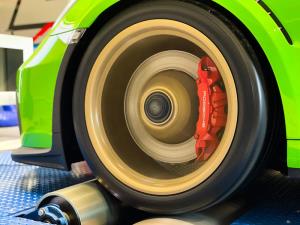

Engine modifications for those looking for high performance and an unmistakable sound.
When it comes to optimising automotive performance, two interventions stand out for their effectiveness and impact: ECU remapping and the installation of sports exhaust systems. These works are the ideal choice for enthusiasts who want to transform their car into a more responsive, powerful and assertive car. ECU mapping allows you to unlock the hidden potential of the engine, changing parameters such as torque delivery, injection times and turbine management. Intervention on the engine control unit can significantly increase horsepower and Nm, also improving throttle response and reducing fuel consumption in certain driving conditions. At the same time, an aftermarket exhaust system optimises the flow of combustion gases, reduces back pressure and gives the gritty sound that characterises prepared cars. Both interventions require technical expertise, professional instrumentation and an in-depth knowledge of engine dynamics to ensure safe and lasting results.
🔧 The remapping of the ECU to unleash the hidden power of the engine.
ECU reprogramming is one of the most requested interventions in the world of automotive tuning. Through dedicated software and test benches, specialized technicians access the original map of the electronic control unit to modify its operating parameters. The process can increase power by 15-30% on turbocharged engines, with less marked but still significant increases on naturally aspirated engines. Custom calibration takes into account the specific characteristics of the vehicle, the owner's driving style and whether there are any other hardware modifications. The benefits are not limited to pure power: it improves elasticity in recovery, a fuller and more progressive torque curve is obtained, and turbo response times are reduced. Stage 1 mapping represents the basic level, which can be performed on cars with standard components, while the higher stages require mechanical upgrades such as larger intercoolers, downpipes and enhanced intake systems.
👉 What to do and useful tips: before proceeding with the engine remapping, check the state of health of the engine through a complete diagnosis and make sure that filters, spark plugs and oil are in optimal condition to support the increase in performance.
🎯 Sports exhaust systems and their role in overall performance.
A high-performance exhaust system is much more than just an aesthetic-sound accessory. Its main function is to optimise the evacuation of exhaust gases, reducing pressure drops that limit engine performance. Sport mufflers use larger diameters, fluid-dynamic curves and materials such as stainless steel or titanium to maximize efficiency. Replacing the stock catalytic converter with a high-flow sports catalytic converter or decat removes further restrictions, increasing power and torque. The racing exhaust manifold optimizes the collection of gases from the cylinders, while specific silencers balance performance and sound. The result is a car that breathes better, accelerates with greater vigor and produces that deep sound so appreciated by enthusiasts. Installation requires specific skills in welding, positioning and fastening to avoid vibrations, leaks or homologation problems.
👉 What to do and useful tips: always choose certified and approved components for road traffic, checking compatibility with the regulations on noise and pollutant emissions in force in your region.
⚙️ The different types of intervention on the electronic management of the engine.
In the field of control unit processing, there are different methods of intervention, each with specific characteristics. OBD remapping is the most widespread and least invasive solution: through the diagnostic port the ECU software is rewritten without physically opening the control unit. Traditional chip tuning, on the other hand, involves the removal and modification of the memory chip, a technique that is now outdated but still used on older cars. Additional or piggyback ECUs are placed between the sensors and the original ECU, changing signals in real time without altering the stock map. Finally, stand-alone ECUs completely replace the original ECU, giving you total control over every aspect of engine management but requiring custom wiring and complex configuration. Each solution has specific advantages in terms of cost, reversibility, performance potential and installation complexity.
👉 What to do and useful tips: read up on the type of remapping that is best suited to your vehicle, considering factors such as residual warranty, expected use and budget available for any complementary upgrades.
📊 The concrete advantages of professional engine training.
Well-executed engine upgrades offer benefits that go beyond simply increasing horsepower on paper. The throttle response becomes more immediate and linear, eliminating the typical delivery gaps present on the stock conservative mappings. Driving pleasure is significantly increased thanks to brighter pick-ups and safer overtaking. In diesel engines, diesel ECU remapping can significantly improve low-end elasticity, which is critical for everyday use. The combination of ECU tuning and sports exhaust generates significant synergies: the ECU uses the improved exhaust flow to further optimise combustion. Some tuners also offer the possibility of multiple selectable mappings, allowing you to switch from an economical road configuration to an extreme sports car with a simple command. The professionalism of the execution also guarantees reliability over time, avoiding problems such as anomalous smoke, overheating or premature failures.
👉 What to do and useful tips: always carry out a dynamometric test before and after interventions to objectively quantify the improvements obtained and verify the correctness of the calibration over the entire range of use of the engine.
🏁 The fundamental components of a complete racing exhaust system.
A complete exhaust system for sports applications consists of several elements, each with specific functions. The exhaust manifold collects the gases coming from the cylinders and represents the first critical point for performance: tubed or stainless steel versions improve flow and thermal resistance. The downpipe, in turbo engines, connects the turbine to the rest of the system and its replacement with larger versions releases significant power. The high-flow sports catalytic converter maintains the purification functionality by drastically reducing pressure drops compared to the original. The center pipe can integrate an intermediate silencer or be completely free in competition configurations. Finally, the exhaust terminal with increased outlets defines the final sound character of the vehicle. Materials such as stainless steel provide durability and corrosion resistance, while titanium offers extreme lightness for high-end racing applications.
👉 What to do and useful tips: carefully evaluate the balance between acoustic performance and daily livability, considering that excessively noisy exhausts can be annoying on urban journeys and create problems with police checks.
🛠️ The tools and skills necessary for safe and effective interventions.
The execution of professional engine modifications requires specific equipment and high technical know-how. Laptops with original tuning software, certified communication interfaces and access to databases of tested and validated maps are indispensable for ECU mapping. The dynamometer allows you to measure power and torque in controlled conditions, monitoring vital parameters such as water temperature, turbo pressure and air-fuel ratio. For unloading, lifts, TIG welding equipment, grinders, torque wrenches and positioning supports are required. Preventive diagnosis requires professional OBD testers, compression meters, exhaust gas analyzers. Specialized technicians must have in-depth knowledge of engine mechanics, automotive electronics, fluid dynamics and homologation regulations. Specific experience on different makes and models is essential to avoid errors that could seriously damage the engine or compromise its reliability.
👉 What to do and useful tips: rely exclusively on specialized centers with proven experience in the sector, requesting references, examples of previous work and written guarantees on the interventions carried out to protect your investment.
💡 The legal and insurance considerations of changes to benefits.
Any intervention that alters the homologated characteristics of the vehicle has implications from a regulatory point of view. The remapping of the control unit modifies the power data shown on the registration certificate and theoretically requires updating at the DMV. In practice, many owners operate in a gray area, aware that roadside checks hardly detect these software changes. Aftermarket exhaust systems, on the other hand, must comply with precise limits of noise emissions measured according to standardized procedures: homologated products bear EEC certification attesting to their conformity. The installation of non-approved components exposes you to administrative penalties and the withdrawal of the registration certificate. From an insurance perspective, changes to benefits should be communicated to the company: failure to declare could compromise coverage in the event of a claim. Some insurance companies offer specific policies for tuned vehicles, with generally higher premiums but adequate guarantees.
👉 What to do and useful tips: inquire in advance about the procedures for homologating modifications at the competent offices and evaluate the costs and times necessary to fully regularize the interventions carried out on your vehicle.
🌟 The differences between road preparations and track configurations.
The needs of those who use the car on a daily basis differ radically from those of the drivers who take it to the circuit. Road preparation favours the balance between performance, reliability, fuel consumption and emissions, while maintaining safety margins that guarantee durability. Road maps voluntarily limit pressures and temperatures to preserve mechanical components such as turbos, pistons and crankshaft. Homologated exhausts use working catalytic converters and low sound levels to comply with regulations. On the contrary, the competition configurations maximize every aspect of performance without compromise: aggressive mappings push the engine to the limits, completely free exhausts eliminate any restrictions, gear ratios are shortened to favor acceleration. These preparations require very frequent maintenance, consume fuel and oil in quantity, and are unusable in city traffic. The choice depends on the intended use: occasional track weekends justify a hybrid setup, while those who compete regularly need dedicated interchangeable setups.
👉 What to do and useful tips: clearly define your needs and the prevailing use of the vehicle before proceeding with the interventions, avoiding extreme configurations that would make the car not very enjoyable in the use for which it is actually used.
🔍 The maintenance and checks required after performance changes.
An upgraded engine requires more attention than the stock configuration. Service intervals should be shortened: engine oil is under greater stress and should be replaced more frequently using higher quality products with appropriate specifications. Spark plugs work in more severe thermal conditions and require periodic checks of their condition and correct electrode distance. The sports air filter, often installed in conjunction with remapping, needs regular cleaning to maintain efficiency. The cooling system must be carefully checked: radiators, pipes and thermostat must work perfectly to avoid harmful overheating. The clutch undergoes higher torques and may need to be upgraded or replaced earlier. Periodic dynamometric checks make it possible to verify that performance remains constant over time and to identify any problems at an early stage. Electronic diagnostics must be performed regularly to monitor critical parameters and promptly correct anomalies.
👉 What to do and useful tips: establish a personalized maintenance program agreed with the preparer who carried out the interventions, using only quality spare parts and fluids with specifications suitable for the greatest stresses.
❓ F.A.Q. - Frequently asked questions about engine tuning and sports exhausts.
🔸 How much does an engine ECU remapping cost on average?
Prices vary significantly depending on the type of vehicle, the complexity of the intervention and the reputation of the tuner. A Stage 1 mapping on common cars can cost between 400 and 800 euros, while more complex interventions on premium cars or with custom mappings can exceed 1500 euros. The additional control units have prices from 300 to over 2000 euros depending on the brand and features.
🔸 Does remapping damage the engine or shorten its lifespan?
A professionally performed remapping, which respects the mechanical safety margins of the engine, should not cause reliability problems. The risk increases with excessively extreme mappings or carried out on engines that are already worn. It is essential to maintain rigorous maintenance and use high-quality fuels.
🔸 Can I go back to the original configuration after remapping?
Yes, OBD remapping is completely reversible: the original file is saved and can be restored at any time. This is useful when selling the vehicle or for warranty checks. The additional control units can be removed by simply disconnecting them.
🔸 How much does it really increase the power with a Stage 1 map?
On modern turbo petrol engines, increases of 20-30% in power and up to 35-40% in torque can be achieved. Turbodiesel diesels gain an average of 25-35% in power and 30-40% in torque. Naturally aspirated engines have lower margins, generally limited to 5-15% increase in performance.
🔸 Does a sports exhaust system really increase performance?
Yes, reducing the back pressures frees up some horsepower, generally between 5 and 15 hp depending on the type of engine and the extent of the changes. The greatest benefits are obtained by combining sports exhaust and ECU remapping, which can take advantage of the improved gas flow.
🔸 Are all sports exhausts very noisy?
No, there are solutions for every need. Valve-controlled systems allow you to switch from quiet to sporty operation. Some mufflers prioritize performance while maintaining discreet sounds, while racing configurations produce high volumes unsuitable for everyday road use.
🔸 Can I install a sports exhaust while keeping the original catalytic converter?
Certainly, many aftermarket systems only replace the tailpipe or center section while keeping the standard catalytic converter. This solution offers a good compromise between improved performance, legality and cost containment compared to a complete racing system.
🔸 Does remapping increase fuel consumption?
It depends on the driving style: by constantly exploiting the additional power, consumption inevitably increases. However, when driving normally, many people experience similar or even slightly lower fuel consumption thanks to the higher torque at low revs that allows them to maintain higher gears.
🔸 Which mechanical components could need to be upgraded along with remapping?
The elements most stressed are the clutch, which could slip with much higher torques, and the braking system, which has to handle higher speeds. Higher quality tires also become advisable. For increases of more than 30%, reinforcements to the transmission and drive shafts are evaluated.
🔸 How do I check whether a tuning center is reliable and competent?
Look for verified reviews online, ask to see previous work and documented dynamometer results. Reputable tuners have their own test bench, use original software, provide written guarantees and show transparency about methodologies and risks. Be wary of those who promise unrealistic increases or excessively low prices.
Engine modifications represent a passion that combines technical expertise and the desire for extreme customization. Choosing the right balance of performance, reliability and legality requires in-depth knowledge and qualified advice. A well-designed sports exhaust system, combined with a judicious ECU remapping, can radically transform the character of a vehicle, delivering superior driving emotions and enhancing the investment made. The key to success lies in the professionalism of those who carry out the interventions and in the owner's awareness of the advantages, limitations and responsibilities involved. Youritaly.it offers visibility to the best professionals in the automotive sector, allowing enthusiasts to identify centers specialized in tuning and engine preparations that guarantee excellent results in full compliance with quality and safety standards.