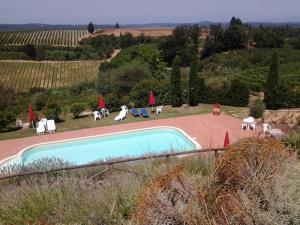
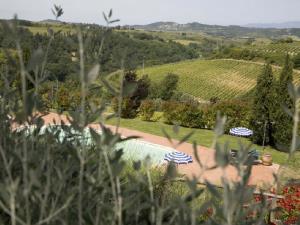
Holidays in the hills in Tuscany: timeless landscapes, Renaissance villages, famous vineyards and the rural beauty of a region that has made the hilly countryside its identity card in the world.
Hilly Tuscany is one of the most recognizable and beloved landscapes on the planet: a territory where solitary cypresses, dirt roads, stone farmhouses and geometric vineyards come together in a visual harmony that artists and travelers have been celebrating for centuries. Holidays in the hills in Tuscany offer something difficult to replicate elsewhere: time slows down, nature becomes the protagonist, every curve of a provincial road reveals a panorama that seems to come out of a Renaissance painting. From Chianti between Florence and Siena to the gentle expanses of the Val d'Orcia, a UNESCO World Heritage Site, from the hills of Valdelsa to the volcanic reliefs of the Maremma, from the terraces of Lunigiana to the ridges of Casentino, Tuscany offers an infinite variety of hilly landscapes, each with its own gastronomic, artistic and natural identity. Those who choose the Tuscan hills for their holidays will find high quality accommodation facilities — farmhouses, villas, hotel villages, bed and breakfasts in historic farmhouses — and a system of medieval villages, wineries and nature trails that makes every day a new experience full of discoveries. 🌄 The Tuscan hilly landscape: why it is considered one of the most beautiful in the world.
The worldwide fame of Tuscany's hilly landscape is not the result of chance: it is the result of millennia of interaction between man and nature, which has produced a rare balance between crops, woods, waterways and rural settlements. The Tuscan hills are distinguished by their morphological variety: the Crete Senesi with their lunar shapes, the gentle slopes of Chianti Classico covered with vineyards and olive trees, the rugged profiles of the Metalliferous Hills in Maremma, the wooded slopes of Mugello and Casentino on the Tuscan-Romagna Apennines. In spring, the colors are bright and iridescent; in summer golden stubble dominates the ridges; in autumn the vineyards are set ablaze with red and orange; In winter, the morning mists envelop the valleys with a suspended and silent atmosphere. Each season offers a different version of the same beauty, making hilltop holidays in Tuscany fulfilling at any time of year.
👉 What to do and useful tips: to photograph the hilly landscapes of Tuscany in their most evocative moments, focus on the hours of sunrise and sunset, when the grazing light enhances the shapes of the land and the cypresses cast long shadows on the dirt roads; the most famous viewpoints are located in the countryside around Pienza, San Quirico d'Orcia, Montalcino and along the ridges of Chianti between Radda and Gaiole. 🏛️ Medieval villages and Renaissance cities on the Tuscan hills: an inexhaustible artistic heritage.
The Tuscan hills are dotted with medieval villages and Renaissance cities that represent some of the highest expressions of Italian civilization. San Gimignano, with its medieval towers that tower over the Valdelsa, is a UNESCO World Heritage Site and one of the most visited villages in Italy. Volterra, on a windswept tuffaceous plateau, preserves an Etruscan and medieval historic center of extraordinary compactness. Montepulciano dominates the Valdichiana with its Renaissance palaces and its cellars dug into the tuff. Montalcino, on its panoramic hill, is the home of Brunello DOCG. Massa Marittima, Pitigliano, Sovana, Castiglione d'Orcia and Radicofani complete a catalog of hilly beauty that requires not days but weeks to be explored with due attention.
👉 What to do and useful tips: organize visits to the hilltop villages of Tuscany favoring the lesser-known ones alongside the famous ones — for every crowded San Gimignano there is a silent and equally beautiful Casole d'Elsa or Monticchiello — so as to alternate experiences of great artistic depth with moments of quiet in places where the daily life of the village still flows at a slow pace. 🍷 Wine and oil on the Tuscan hills: a journey through the most celebrated denominations in Italy.
Hilly Tuscany is the beating heart of Italian viticulture, with a concentration of appellations of excellence that has no equal in the country. Chianti Classico DOCG, Brunello di Montalcino DOCG, Vino Nobile di Montepulciano DOCG, Morellino di Scansano DOC, Vernaccia di San Gimignano DOCG and the Supertuscans of the Etruscan Coast are names that resonate in the best restaurants in the world. Tuscan wineries on the hills are often architectural structures of great charm, with vineyards stretching for hectares in breathtaking panoramic positions. Tuscan PDO extra virgin olive oil, produced from cultivars such as Frantoio, Moraiolo and Leccino, is among the best in Italy. Tastings in the cellar, visits to oil mills during autumn milling and pairings with local gastronomic products are experiences that deeply enrich holidays in the hills in Tuscany.
👉 What to do and useful tips: visit a Chianti Classico or Brunello di Montalcino winery by booking the guided tasting in advance; Many wineries offer tours through the vineyards with explanations of viticulture techniques, combined with the tasting of several labels with typical local products, transforming the visit into a cultural as well as gastronomic experience. 🌿 Nature and regional parks on the hills of Tuscany: woods, reserves and unexpected landscapes.
In addition to the world-famous agricultural landscapes, the Tuscan hills hide natural areas of great value, often less known but of extraordinary beauty. The National Park of the Casentino Forests covers the Apennine slopes between Arezzo and Romagna, with beech and fir forests among the oldest in Italy. The Maremma Regional Park protects the Grosseto coast with Mediterranean scrub, dunes, lagoons and wildlife of great variety. The Monterufoli-Caselli Nature Reserve in the Val di Cecina is an oasis of silence and biodiversity. Monte Amiata, an extinct volcano overlooking the inner Maremma, is covered with chestnut and beech woods and offers hiking trails that can be frequented in every season, with winter snowfalls that transform it into a small ski resort.
👉 What to do and useful tips: dedicate a day of your holidays in the hills in Tuscany to an excursion in the National Park of the Casentino Forests, choosing one of the marked paths that lead to the monasteries of Camaldoli and La Verna; They are places of great spiritual and natural value, immersed in ancient forests where the silence is so deep that it itself becomes part of the visit experience. 🍽️ The cuisine of the Tuscan hills: from steak to truffles, passing through pici and ribollita.
Tuscan hill cuisine is direct, generous and deeply rooted in the territory. Pici with wild boar sauce, a large and irregular fresh pasta typical of the Val d'Orcia and the Maremma, are among the most identifying dishes of the region. The Florentine steak of Chianina PGI, at least four fingers high and cooked rare on the grill, is a gastronomic ritual that is celebrated in restaurants and trattorias throughout hilly Tuscany. Ribollita, a soup of stale bread, black cabbage and beans, is the dish of the peasant tradition par excellence. The white truffle of San Miniato and the black truffle of the Crete Senesi perfume the autumn menus. The pecorino cheeses of Pienza and the Maremma, aged in pits or caves, complete a gastronomic repertoire of great depth.
👉 What to do and useful tips: look for a country trattoria in the Tuscan hills that prepares pici with meat sauce with hand-pulled pasta the same day; They are restaurants often without flashy signs, reported by local word of mouth, where the quality of the raw material and the simplicity of the preparation produce gastronomic results that are difficult to match even in the most famous restaurants in the cities. 🏡 Where to stay in the Tuscan hills: farmhouses, historic villas and hotel villages.
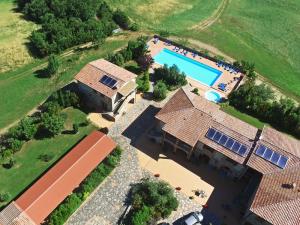
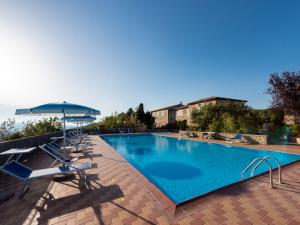
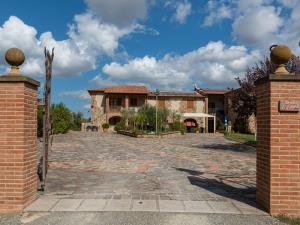
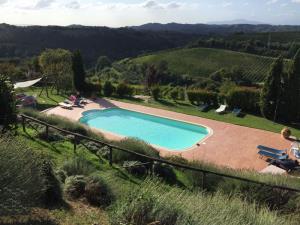
The accommodation offer of hilly Tuscany is among the richest and most varied in Italy. Tuscan farmhouses obtained from ancient farms, farms and stone farmhouses are the most sought-after solution, with panoramic swimming pools, organic gardens and dinners based on their own products. The historic villas with park, typical of Chianti and Valdinievole, offer hospitality of great elegance in environments full of history. The hotel villages — medieval villages entirely renovated as widespread accommodation facilities — allow you to sleep inside history, with apartments and rooms obtained from farmhouses and historic buildings restored with philological respect. The bed and breakfasts in farmhouses in the most remote areas of the Val d'Orcia or Casentino complete a receptive panorama that satisfies every type of traveler and every budget range.
👉 What to do and useful tips: if you want a truly isolated stay in the Tuscan hilly landscape, look for facilities located along the dirt roads of the hinterland of the Val d'Orcia or Chianti, away from the main roads; These structures often offer total silence, starry skies without light pollution and a much more intense perception of the Tuscan landscape than the structures located in the most touristic villages. 🚴 Cycling and trekking in the Tuscan hills: the dirt roads and the historic paths.
The Tuscan hills are a paradise for cycling and trekking: the network of dirt roads — panoramic dirt roads that cross vineyards, olive groves and woods without car traffic — is one of the least exploited treasures of the region for those who love to get around on foot or by bicycle. The Strade Bianche, a cycling race that crosses Chianti every year in March, has made these earthy routes that connect farms, farmhouses and villages in the Sienese hinterland famous all over the world. The Via Francigena, which crosses Tuscany from north to south passing through Lucca, Siena and the Val d'Orcia, is one of the most fascinating walking itineraries in Europe, which can be covered in several stages with overnight stays in affiliated facilities along the way.
👉 What to do and useful tips: walk a stretch of the Via Francigena in Tuscany during your hilly holidays, choosing the stage between San Quirico d'Orcia and Radicofani that crosses some of the most iconic landscapes of the Val d'Orcia; It is a route of medium difficulty, well marked and walkable in a whole day with a morning departure, with views of the Tuscan landscape that remain etched in the memory. 🎭 Festivals, festivals and events in the Tuscan hills: a lively calendar all year round.
The Tuscan hills experience a calendar of events, festivals and cultural events that animate the villages in every season. In summer, the medieval squares of Montepulciano, Montalcino and San Gimignano host concerts, theatrical performances and international classical music and jazz festivals. The Bravio delle Botti in Montepulciano and the Palio dei Ciuchi in Torrita di Siena are historical re-enactments in costume that attract participants and spectators from all over the region. In autumn, the festivals dedicated to the white truffle of San Miniato, new wine and porcini mushrooms animate the villages of the hinterland with aromas and flavors of the richest season of the Tuscan gastronomic year. Winter brings with it black truffle fairs and Christmas markets in medieval old towns.
👉 What to do and useful tips: plan a stop at the National White Truffle Fair of San Miniato, held on weekends in November, to buy Tuscan white truffles directly from local pickers and participate in tastings and show cooking with local chefs; it is one of the most popular food and wine events in hilly Tuscany and requires advance booking of nearby accommodation facilities. 🗺️ How to reach the Tuscan hills and organize travel during the holidays.
The hilly Tuscany can be easily reached from all over Italy and Europe. The airports of Florence Peretola and Pisa Galileo Galilei are the main regional airports, with flights from dozens of European and national destinations. The high-speed railway stations of Florence Santa Maria Novella, Arezzo and Grosseto connect the region with Rome, Milan and Bologna in a short time. The A1 motorway runs through Tuscany from north to south with toll booths that give direct access to the main hilly areas. Once in the region, the car is the most practical and pleasant way to explore the Tuscan countryside: the scenic provincial roads, often deserted on weekdays, offer a once-in-a-lifetime driving experience through landscapes of extraordinary beauty.
👉 What to do and useful tips: if you arrive in Tuscany by plane or train and do not want to rent a car, consider staying in a single hilltop village well served by public transport, such as Montepulciano or San Gimignano, from which you can organize daily excursions with tourist shuttles or rental bikes to the surrounding countryside and wineries. ❓ F.A.Q. - Frequently asked questions about holidays in the hills in Tuscany.
🗓️ When is the best time for hill holidays in Tuscany?
Each season has its own specific beauty. Spring, from April to June, offers flowery landscapes and ideal temperatures for excursions and visits to villages. Summer is the peak season for tourism, with events and festivals in every municipality. September and October are perfect for the grape harvest, truffles and foliage colors. Winter offers silent villages, evocative mists and festivals related to pork butchery and black truffles.
🏡 What are the best areas for hill holidays in Tuscany?
The most popular hilly areas are the Chianti Classico between Florence and Siena, the Val d'Orcia with its UNESCO heritage landscapes, the Crete Senesi east of Siena, the Valdichiana around Montepulciano, the inland Maremma with Monte Amiata and the Metalliferous Hills, the Casentino and Mugello in the Florentine hinterland and the Valdinievole in western Tuscany.
🍷 Can Tuscan wineries be visited without reservation?
Some smaller wineries in the Tuscan hills accept visits without reservations, but most quality establishments require advance reservations, especially in the summer and autumn months. Booking guarantees a more curated guided tour, a personalized tasting experience and the possibility of choosing the type of route that best suits your interests.
🚗 Is a car necessary to visit the Tuscan hills?
The car is strongly recommended to freely explore the Tuscan hilly countryside, especially to reach farmhouses and wineries located along secondary or dirt roads. The main villages such as Siena, Arezzo, San Gimignano and Montepulciano can also be reached by public transport, but the flexibility of the car is irreplaceable to fully enjoy the rural landscape.
🌿 Are there suitable trekking trails for everyone in the Tuscan hills?
Yes, the trail network of hilly Tuscany includes routes of all levels of difficulty, from flat walks along the dirt roads of Chianti to more challenging excursions in the Casentino Forests National Park. The Via Francigena is accessible to walkers of any physical preparation, with stages that can be modulated according to one's abilities.
🍽️ What is the typical cuisine of the Tuscan hills?
The cuisine of the Tuscan hills is based on simple and quality ingredients: pici with wild boar or hare sauce, Florentine steak from Chianina, ribollita, pappa al pomodoro, bean soups, black and white truffles, pecorino cheese from Pienza, Cinta Senese cured meats and lard from Colonnata. Traditional desserts include cantucci with Vin Santo and panforte senese.
📸 What are the most beautiful viewpoints of the Tuscan hills?
Among the most famous are the Belvedere farm in Val d'Orcia near San Quirico, the ridges between Radda and Gaiole in Chianti, the viewpoint of Pienza on the Val d'Orcia, the terracce of Montepulciano on the Valdichiana, the sanctuary of San Biagio below Montepulciano and the viewpoints of the Crete Senesi around Asciano, all accessible by car or on foot.
🎭 What are the most important events in the Tuscan hills during the year?
Among the main hillside events are the Bravio delle Botti in Montepulciano in August, the Giostra del Saracino Tournament in Arezzo in June and September, the White Truffle Fair in San Miniato in November, the Strade Bianche cycling in Chianti in March, the Calcio Storico Fiorentino in June and the numerous summer and autumn festivals dedicated to typical local products.
🐾 Do the accommodation facilities on the Tuscan hills accept pets?
Many farmhouses and accommodation facilities in the Tuscan hills accept pets, especially dogs, thanks to the large outdoor spaces available. It is always essential to communicate this at the time of booking and check for any restrictions. The Tuscan countryside offers paths and natural spaces ideal for walks with animals in any season.
📅 How far in advance should I book a stay in the hills of Tuscany?
In the high summer season and during the main autumn events such as the grape harvest and truffle fairs, it is advisable to book at least three months in advance, especially for the most popular farmhouses and historic villas. For stays in charming hotel villages and facilities in Chianti and Val d'Orcia, advance booking is recommended at any time of the year.
Holidays in the hills in Tuscany are an experience that goes beyond simple tourism: they are an encounter with a landscape that has defined the very idea of rural beauty in the West, with a gastronomy that transforms simple ingredients into masterpieces of taste, with a history of art that emerges at every step between the alleys of medieval villages and the halls of Renaissance villas. Hilly Tuscany never disappoints those who choose it with curiosity and respect, because it has the rare ability to renew itself with every visit, in every season, in every daylight. Whether you stay in a farmhouse in Chianti, in a farmhouse in the Val d'Orcia or in a hotel village in the Maremma, the result is always the same: a sense of belonging to something great and lasting that you carry with you even after your return. Youritaly.it collects useful information for those who want to better plan their holidays in the hills in Tuscany, orienting themselves among accommodation facilities, wineries to visit, villages, natural parks and food and wine itineraries of this extraordinary region.