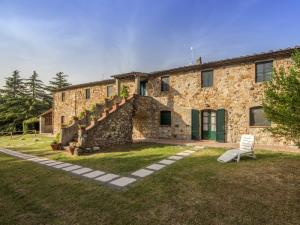
Holidays on the Etruscan Coast: crystal clear sea, historic villages, famous wines and a Tuscan coastline that combines natural beauty with the depth of a thousand-year-old civilization.
The Etruscan Coast is the stretch of Tuscan coastline that extends from Livorno to Piombino, embracing about 80 kilometers of coastline between the Tyrrhenian Sea and the metalliferous hills of the hinterland. It takes its name from the widespread presence of the Etruscan civilization, which in this area left indelible traces of a sophisticated and mysterious culture, still visible today in the archaeological sites of Populonia, Vetulonia and Populonia Alta. Holidays on the Etruscan Coast offer a combination that is difficult to replicate elsewhere: beaches of fine sand and transparent seabed, medieval villages perched on the hills, vineyards that produce some of the most popular wines in Italy, fragrant coastal pine forests and nature reserves where wildlife lives undisturbed. From Castiglioncello to Cecina, from San Vincenzo to Sassetta, from Suvereto to Campiglia Marittima, each village and each stretch of coast has its own personality, making this Tuscan coast one of the most complete and multifaceted destinations in the Mediterranean. 🌊 The sea of the Etruscan Coast: beaches, seabed and waters of the Tyrrhenian Sea among the most beautiful in Tuscany.
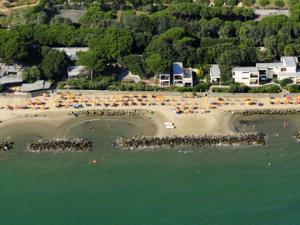
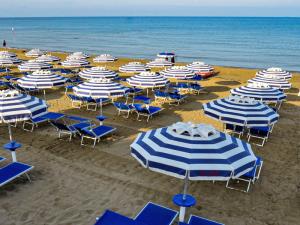
The sea of the Etruscan Coast is among the most beautiful and varied in Tuscany: long sandy beaches, rocky coves hidden among the Mediterranean scrub, beaches equipped with high-level services and free beaches surrounded by nature alternate. The Gulf of Baratti, framed by the promontory of Populonia, is considered one of the most evocative bodies of water in the Tyrrhenian Sea, with transparent seabeds and a fine sandy beach protected by the presence of the surrounding Archaeological Park. The beaches of San Vincenzo, Donoratico and Marina di Castagneto Carducci are among the most popular and best served on the coast. The Sterpaia Coastal Park near Piombino is instead a nature reserve with dunes, pine forests and free beaches of great beauty, reachable only on foot or by bicycle through the park's paths.
👉 What to do and useful tips: visit the Gulf of Baratti in the early hours of the morning or late afternoon to enjoy the beach with less turnout and with the light more favorable to photographs; on clear days, from the shore you can clearly see the silhouettes of the Island of Elba, Capraia and, in the most favorable conditions, even the profile of Corsica on the horizon of the Tyrrhenian Sea. 🏛️ The Etruscans and archaeological sites: a thousand-year-old civilization that still speaks through stone.
The Etruscan Coast owes its name to the extraordinary density of Etruscan settlements and necropolises that dot the territory, testimony of one of the most advanced and mysterious Italic civilizations of antiquity. The Archaeological Park of Baratti and Populonia is one of the most important and best preserved Etruscan sites in Italy: the necropolis of the Gulf with its tumulus tombs, the cyclopean walls of the upper city and the Etruscan Museum of Populonia tell centuries of history with rare clarity. Populonia Alta, a medieval village built on the ruins of the Etruscan city, dominates the gulf from a panoramic position of extraordinary impact. The Archaeological Museum of the Territory of Populonia in Piombino and the Civic Archaeological Museum of Vetulonia complete a journey of knowledge that makes holidays on the Etruscan Coast a journey through time as well as space.
👉 What to do and useful tips: visit the Archaeological Park of Baratti and Populonia by purchasing the combined ticket that includes the necropolis, the upper town and the museum; It is advisable to dedicate half a full day and wear comfortable shoes, as the paths between the Etruscan tombs wind through natural terrain often sloping through the Mediterranean vegetation of the promontory. 🍷 Wines and wineries of the Etruscan Coast: from the hills of Bolgheri to Suvereto DOCG.
The Etruscan Coast is one of the most prestigious wine territories in Italy, with denominations that in recent decades have conquered international markets and the palates of the most demanding critics. Bolgheri DOC and Bolgheri Sassicaia DOC were born right here, in the plain between the hills and the sea where the particular microclimate favors the production of red wines of extraordinary complexity. Suvereto DOCG, in the Val di Cornia, is the most recent denomination but of the highest quality, with blends based on Cabernet Sauvignon and Merlot. Val di Cornia DOC completes an oenological panorama of rare richness. The wineries of the Etruscan Coast are often architectural structures of great charm, many of which open to the public for guided tastings among the rows of vines overlooking the Tyrrhenian Sea and the Island of Elba.
👉 What to do and useful tips: travel along Bolgheri's Cypress Avenue by car or bicycle in the early hours of the morning, when the light filters through the rows of centuries-old cypresses creating an unforgettable visual effect; continue to the medieval village of Bolgheri to visit the central square and book a tasting at a local winery, pairing the wine with typical products of the Etruscan Coast. 🏘️ The medieval villages of the Etruscan Coast: Suvereto, Campiglia Marittima and Castagneto Carducci.
The hinterland of the Etruscan Coast is dotted with medieval villages perched on the hills, often ignored by the mass of seaside tourists but of great historical and architectural value. Suvereto, included in the list of the most beautiful villages in Italy, preserves an intact medieval wall, a thirteenth-century town hall and a network of stone alleys that climb towards the fortress dominating the Val di Cornia. Campiglia Marittima, with its fortress and well-preserved historic center, is another little-visited jewel of this coast. Castagneto Carducci, which owes its name to the poet Giosuè Carducci who stayed there for a long time, dominates the Bolgheri plains and the sea from above. Sassetta, immersed in the chestnut woods of the hinterland, is a village of extraordinary quiet and environmental beauty.
👉 What to do and useful tips: dedicate a morning to visiting Suvereto walking through the medieval alleys and stopping in the wine shop in the historic center for a tasting of Suvereto DOCG; The village is particularly beautiful in the early hours of the day, when the morning light illuminates the medieval towers and portals before the summer heat invites you to seek the shade of the alleys. 🌿 Nature and parks of the Etruscan Coast: reserves, Mediterranean scrub and wildlife.
The Etruscan Coast preserves natural areas of great value that alternate with the most popular stretches of coast, creating a rare balance between seaside tourism and environmental conservation. The Sterpaia Coastal Park, north of Piombino, is a reserve of Mediterranean scrub with coastal dunes, pine forests and free beaches of great beauty. The Rimigliano Nature Reserve, between San Vincenzo and Piombino, is an oasis of unspoiled nature where paths between holm oaks and junipers lead to beaches of fine sand accessible only on foot. The Montioni Natural Park, inland between the Val di Cornia and the Maremma, is a large forest with trails for hiking, mountain biking and wildlife watching. Fallow deer, wild boars and birds of prey are common occurrences in these protected areas.
👉 What to do and useful tips: visit the Rimigliano Nature Reserve on foot or by bicycle along the path that runs between the pine forest and the seashore; it is a flat route of about 5 kilometers, accessible to all and also suitable for families with children, which leads to wild beaches far from the confusion of the equipped beaches of the Etruscan Coast. 🚴 Sports and outdoor activities on the Etruscan Coast: from cycling to kayaking, from trekking to sailing.
The Etruscan Coast is an all-round sports destination, with an offer of outdoor activities that satisfies every type of active traveler. Cycling tourism is particularly developed: the network of secondary roads and dirt roads that cross the hills of Bolgheri, Val di Cornia and Montioni Park offers routes of all difficulties, from the flat along the coast to challenging climbs to the hilltop villages. Sea kayaking and sup are practiced along the entire coast, with guided excursions to the most hidden coves of the Populonia promontory. Sailing and windsurfing find optimal conditions thanks to the regular winds of the Tyrrhenian Sea. Trekking in the hinterland and horseback riding through the woods of the Livorno Maremma complete a sports offer of great variety.
👉 What to do and useful tips: rent a sea kayak from the boat operators of Baratti or San Vincenzo to explore the coves of the Populonia promontory from the sea side; it is an experience that combines sport, nature and history in a unique way, allowing you to get closer to the ancient Etruscan walls of Populonia Alta from the perspective of the Gulf of Baratti and to reach small beaches inaccessible by land. 🌅 Castiglioncello and the north coast of the Etruscan Coast: elegance, history and sea of the Etruscan Riviera.
Castiglioncello is the most elegant and historic seaside resort on the Etruscan Coast: a promontory of Mediterranean scrub overlooking the Tyrrhenian Sea, frequented since the nineteenth century by the Tuscan intellectual bourgeoisie and became a favorite destination of Italian cinema in the twentieth century, with actors, directors and intellectuals who made it their summer refuge. The Pasquini Castle, now home to cultural events, dominates the promontory with a view of the sea and the islands. The natural pools carved into the rocks, the coves accessible only by sea and the promenade animated by historic cafes make Castiglioncello a destination with a double soul: worldly and natural at the same time. Further south, Cecina Mare and Marina di Bibbona offer long sandy beaches with pine forests behind and a more family-friendly seaside vocation.
👉 What to do and useful tips: explore the natural pools in the rocks of Castiglioncello by reaching them on foot from the town center through the paths of the Mediterranean scrub; they are small natural wonders where the waters of the Tyrrhenian Sea collect in rock pools of varying sizes, creating protected bathing environments of rare beauty, ideal especially for children on windy days. 🍽️ The cuisine of the Etruscan Coast: fish, game, truffles and the flavors of the Livorno Maremma.
The gastronomy of the Etruscan Coast is a cuisine on the border between the sea and the Tuscan countryside, capable of enhancing the catch of the Tyrrhenian Sea and the products of the land with equal mastery. The cacciucco alla livornese, a mixed fish soup with toasted bread rubbed with garlic, is the symbolic dish of the seafood cuisine of this coast. Stewed wild boar with olives, hare alla cacciatora and roe deer are the protagonists of the hunting cuisine of the hinterland. The summer truffle of the Val di Cornia perfumes the menus of July and August, while in autumn the porcini mushrooms of the woods of Montioni and Sassetta arrive on the tables of local restaurants. The pecorino cheeses of the Maremma Livorno and the artisanal cured meats complete a gastronomic tradition of great character, enhanced by the wines of Bolgheri and Suvereto.
👉 What to do and useful tips: look for a fish trattoria in the port area of Piombino or in the streets of the center of San Vincenzo to taste the cacciucco alla livornese prepared according to the traditional recipe with at least five different types of fish and shellfish; It is a dish that requires a long preparation and is found in its most genuine version in the places frequented by fishermen and locals. 🗺️ How to reach the Etruscan Coast and organize your stay between the sea and the hinterland.
The Etruscan Coast is easily accessible from many Italian cities. By car, take the A12 Livorno-Civitavecchia motorway with exits at Rosignano Marittimo for the north coast, at Donoratico or San Vincenzo for the centre of the coast and at Venturina Terme or Piombino for the south coast. The Tyrrhenian railway line connects Livorno, Cecina, San Vincenzo and Campiglia Marittima with regular frequencies. Pisa Galileo Galilei Airport is about an hour's drive from the coast. Once in the area, the car remains the most practical way to freely explore the inland villages, the wineries of Bolgheri and the nature reserves, while the bicycle is increasingly used along the coast and the flat routes of the Val di Cornia.
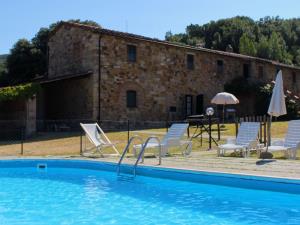
👉 What to do and useful tips: if you plan to stay on the Etruscan Coast for several days, divide your stay between accommodation on the coast for the marine part and a structure in the hilly hinterland — a farmhouse near Suvereto or Sassetta — to experience the two souls of the area without having to travel long distances every day during excursions in the hinterland of the Livorno Maremma. ❓ F.A.Q. - Frequently asked questions about holidays on the Etruscan Coast.
🗓️ When is the best time to vacation on the Etruscan Coast?
The bathing season runs from May to September, with the highest influx in July and August. Spring is ideal for excursions inland and visits to Etruscan sites with pleasant temperatures and few crowds. September and October are great for those who want to combine the still warm sea with the grape harvest in the Bolgheri cellars and mushrooms in the woods of the hinterland.
🏛️ How long does it take to visit the Archaeological Park of Baratti and Populonia?
A complete visit to the Archaeological Park of Baratti and Populonia takes at least three or four hours, including the Etruscan necropolis of the gulf, the climb to Populonia Alta with the cyclopean walls and the medieval village and the visit to the park museum. For a more in-depth visit with an audio guide or local guide, it is advisable to dedicate a whole morning to it.
🍷 Where is the Viale dei Cipressi di Bolgheri located and how can I get there?
The famous Viale dei Cipressi di Bolgheri is located on the road that connects the Via Aurelia to the medieval village of Bolgheri, in the municipality of Castagneto Carducci. It can be reached by car by exiting the A12 motorway at the Donoratico tollbooth and taking the provincial road towards Bolgheri. The avenue is about five kilometers long and can be traveled by both car and bicycle.
🌊 Are the beaches of the Etruscan Coast suitable for children?
Many beaches on the Etruscan Coast are suitable for children thanks to the sandy and shallow bottoms that extend for several meters from the shore. The beaches of San Vincenzo, Marina di Castagneto Carducci and Donoratico are particularly suitable for families with small children, with equipped bathing establishments and calm and transparent waters.
🚴 Is it possible to visit the Bolgheri wineries by bicycle?
Yes, the Bolgheri DOC wineries can be reached by bicycle from San Vincenzo or Marina di Castagneto Carducci with flat routes of about 15-25 kilometers. E-bikes are available for rent at different points on the coast and make the route accessible even to those who do not have great physical preparation. Many wineries accept visits by reservation.
🌿 What are the most beautiful nature reserves to visit on the Etruscan Coast?
The main protected natural areas are the Rimigliano Nature Reserve between San Vincenzo and Piombino, the Sterpaia Coastal Park north of Piombino, the Montioni Natural Park in the hinterland and the San Vincenzo pine forest. All of them offer paths accessible on foot or by bicycle and allow you to discover the typical flora and fauna of the Tuscan Mediterranean scrub.
🏘️ Is Suvereto really one of the most beautiful villages in Italy?
Yes, Suvereto is officially included in the list of the most beautiful villages in Italy and fully deserves this classification. The medieval old town with its intact city walls, the thirteenth-century town hall, the Romanesque church and the stone alleys is one of the best preserved in southern Tuscany. The wine production of Suvereto DOCG also makes it an unmissable stop for wine lovers.
🍽️ Is cacciucco alla livornese easily found on the Etruscan Coast?
Yes, cacciucco is the most representative dish of the seafaring tradition of this stretch of coast and is present on the menus of many fish restaurants in the area, especially in Livorno, Castiglioncello and San Vincenzo. The most genuine version can be found in the places frequented by local fishermen and in the historic trattorias of the port centers, where the recipe is respected with fresh ingredients of the day.
🛶 Can you kayak and snorkel in the Gulf of Baratti?
Yes, the Gulf of Baratti is one of the favorite destinations for sea kayakers and snorkelers thanks to the transparent waters and the seabed rich in posidonia. Several local boat operators offer kayak and snorkeling equipment rentals, as well as guided excursions around the Populonia promontory with explanations about the Etruscan history visible from the waters of the gulf.
📅 How far in advance should I book for holidays on the Etruscan Coast?
In high season, in July and August, it is advisable to book at least two or three months in advance for the most popular facilities, especially in the farmhouses in the hinterland and in the hotels with private beaches in the area of San Vincenzo and Castiglioncello. In spring and September, availability is higher and prices are generally cheaper than at the peak of summer.
The Etruscan Coast is a destination that manages to surprise those who discover it for the first time and to retain those who return: a Tuscan coast where the beauty of the Tyrrhenian Sea blends with the historical depth of the Etruscan sites, where the wines of Bolgheri and Suvereto dialogue with the flavors of cacciucco and hunting cuisine, where fine sandy beaches coexist with unspoiled nature reserves and medieval villages of extraordinary integrity. Each stretch of this coast tells something different — the discreet glamour of Castiglioncello, the sporting vocation of San Vincenzo, the millenary history of Populonia, the silence of the woods of Sassetta — but all contribute to forming a coherent territorial identity of great value. Youritaly.it collects useful information for those who want to better plan their holidays on the Etruscan Coast, orienting themselves among the accommodation facilities of the coast and the hinterland, the archaeological sites, the Bolgheri wineries, the nature reserves and the gastronomic experiences of this extraordinary portion of maritime Tuscany.