Delicacies and excellences of Campania


The delicacies and excellences of Campania: a complete guide to the flavors, typical products and gastronomic traditions of a region that has given the world Neapolitan pizza, PDO buffalo mozzarella and a food culture of extraordinary depth and vitality.
Campania is one of the Italian regions with the most recognizable, loved and imitated gastronomic tradition in the world: a territory that includes the creative frenzy of Naples, the agricultural generosity of the Caserta and Salerno plains, the seafood cuisine of the Amalfi Coast and the Sorrento Peninsula, the wild beauty of Cilento and the pastoral tradition of inland areas such as Sannio and Irpinia. The gastronomic excellences of Campania are not the result of bourgeois refinements or passing fashions: they are the product of a millenary popular culture that has been able to transform simple ingredients into immortal dishes, recognized by UNESCO as a World Heritage Site — as in the case of the Mediterranean Diet and Neapolitan pizza — and appreciated in every corner of the planet. From the San Marzano PDO tomato to the buffalo mozzarella Campana PDO, from the Sorrento lemon PGI to the provolone del Monaco PDO, from wines such as Taurasi DOCG and Fiano di Avellino DOCG to desserts such as the Neapolitan sfogliatella and the rum babà, gastronomic Campania is a universe of flavors that deserves to be explored with the same passion with which it was created.
🍕 The Neapolitan pizza, a UNESCO World Heritage Site, is the most famous gastronomic excellence of Campania and one of the most recognizable culinary symbols of the entire Italian culture in the world.
There is no gastronomic product in the world that has the same capacity for cultural identification as Neapolitan pizza: recognized in 2017 by UNESCO as an intangible cultural heritage of humanity, this preparation born in the alleys of Naples in the eighteenth century has conquered every corner of the planet while remaining inextricably linked to its city of origin. The Neapolitan pizza TSG — Traditional Specialty Guaranteed — is a product of millimetric precision: dough made with type 00 soft wheat flour, natural or brewer's yeast, water and sea salt, leavened for at least eight hours, rolled out by hand with the characteristic circular movement that forms the swollen crust, seasoned with San Marzano DOP tomato, buffalo mozzarella Campana DOP or fior di latte, and baked in a Neapolitan wood-fired oven at over 450 degrees for no more than ninety seconds. The two canonical variants recognized — the Marinara with tomato, garlic, oregano and oil, and the Margherita with tomato, mozzarella and basil — are the purest expressions of an artisan tradition that Neapolitan pizza makers pass on from generation to generation with almost sacred rigor.
👉 What to do and useful tips: to taste Neapolitan pizza in its most authentic version, look for it in the historic pizzerias of the Spanish quarters, the Decumanus and Spaccanapoli in Naples — the queues outside the most famous places are part of the experience and often guarantee quality; arrive at opening time to avoid excessive waiting and order it in the simplest version — Marinara or Margherita — to really evaluate the quality of the dough and the crust without distractions.
🧀 Buffalo mozzarella Campana PDO is the most famous cheese in Campania and one of the most popular and imitated dairy products in the world.
Buffalo mozzarella Campana PDO is undoubtedly the symbolic dairy product of Campania and one of the best known and most imitated Italian cheeses in the world, but never really equaled in its original version produced in the territories of choice of the Mediterranean buffalo. The plains of Caserta — in particular the areas of Aversa, Mondragone and Carinola — and those of Salerno around Battipaglia, Paestum and the Piana del Sele are the territories where the Italian Mediterranean buffalo produces fresh whole milk that master cheesemakers transform daily into a stretched curd of extraordinary softness, with a slightly acidic flavor and the scent of natural enzymes that no industrial imitation can replicate. PDO buffalo mozzarella should be consumed very fresh — ideally within 24-48 hours of production — and should never be refrigerated below 15 degrees: the cold irreparably alters its texture and flavor, transforming the soft paste into a tasteless gum.
👉 What to do and useful tips: visit the dairies of the Piana del Sele or Casertano to buy buffalo mozzarella Campana PDO directly at the source — many producers open sales early in the morning and the fresh product of the day is a completely different experience than what is found in large retailers; Ask for it in the buffalo braid shape or in the knot version to discover the more artisanal variants of Campania spun curd.
🍅 The San Marzano PDO tomato grown in the Vesuvius plain is an ingredient of absolute excellence that has revolutionized Italian and world cuisine.
Grown on the potassium-rich volcanic soils of the plain at the foot of Vesuvius, between the municipalities of San Marzano sul Sarno, Sarno, Siano and numerous other towns in the Salerno area and the Agro Nocerino-Sarnese, the San Marzano PDO tomato is the most famous and appreciated canned tomato in the world, a fundamental ingredient of Neapolitan pizza and dozens of traditional recipes from Campania and Italy. The San Marzano variety is distinguished by its elongated shape with a pointed apex, its thick and compact pulp with few seeds, its balanced sweet-sour flavor and the absence of excess vegetation water — characteristics that make it perfect for cooking and for storing in cans. The volcanic soil of Vesuvius, rich in minerals and with excellent drainage capacity, gives the San Marzano tomato a minerality and a natural sweetness that crops in other territories are unable to replicate, making it an absolute unicum in the panorama of Campania horticultural excellence.
👉 What to do and useful tips: buy San Marzano PDO tomato preserves directly in the local markets of Campania or in shops selling typical products — distinguish the PDO-certified product from the simple 'San Marzano type' by checking the mark on the jar; In the summer months, between July and September, some producers of the Vesuvius plain organize days of visits and tastings of freshly prepared artisanal preserves, an experience of great authenticity.
🍋 The Sorrento PGI lemon and the Amalfi Coast PGI lemon are citrus fruits of excellence that perfume the cuisine and pastry of Campania with an unmistakable aroma.
The terraces of the Sorrento Peninsula and the Amalfi Coast, built over the centuries overlooking the Tyrrhenian Sea with dry stone walls of lava stone, are home to some of the most scenic and valuable citrus crops in the Mediterranean. The Sorrento PGI lemon — an Ovale di Sorrento variety, also called femminello — and the Costa d'Amalfi PGI lemon — a Sfusato Amalfitano variety, larger in size and oblong in shape — are citrus fruits of exceptional quality, characterized by a thick skin, rich in fragrant essential oils, and an abundant, acidic and aromatic juice that perfumes Campania cuisine in all its expressions. Limoncello from Campania, a liqueur produced by infusion of PGI lemon peel in pure alcohol, is the most famous and widespread preparation based on this citrus fruit: properly prepared with untreated peels, quality alcohol and water, it is one of the most exported Italian liqueurs in the world. But the Sorrento and Amalfi lemons also enter pastry — the lemon delight, the limoncello baba, the lemon cake — and in savory cuisine, as a condiment for pasta, fish and salads.
👉 What to do and useful tips: in Sorrento and along the Amalfi Coast, buy artisanal limoncello directly in the small local laboratories that work exclusively with untreated IGP lemons — the difference compared to industrial productions is immediately felt in the aroma and aromatic freshness; Always ask if the product is made with alcohol at 96 degrees and with maceration of the peels only, without the addition of artificial flavors.
🍷 Campania wines such as Taurasi DOCG, Fiano di Avellino DOCG and Greco di Tufo DOCG are among the noblest and longest-lived denominations in Southern Italy, an expression of a unique volcanic terroir.
Campania viticulture has its roots in Greek and Roman antiquity — the wines of Campania Felix were celebrated by Pliny, Virgil and Horace — and today it is expressed through a system of high quality denominations that is mainly concentrated in the hills of Irpinia, in the province of Avellino. Taurasi DOCG, produced from the native Aglianico grape variety in the municipalities of Alta Irpinia around Taurasi, is the great red wine of Campania: structured, tannic, with an acidic freshness that guarantees it extraordinary longevity and an evolution in the bottle that is measured over decades. Fiano di Avellino DOCG, a white wine of great complexity produced from the Fiano grape variety in the hilly areas of Irpinia, is considered one of the best Italian whites for its aging capacity: in youth it expresses floral and fresh hazelnut notes, over the years it develops a mineral complexity and a flavor that amaze those who expected a white wine to be drunk young. Greco di Tufo DOCG, the third great white wine from Campania produced in the Tufo area on tuffaceous soils, completes an Irpinia wine triad of absolute level on the Italian and international scene.
👉 What to do and useful tips: if you visit Irpinia, travel along the Irpinia Wine and Flavors Route stopping in the cellars of the Taurasi DOCG and Fiano di Avellino DOCG producers for direct tastings — many wineries offer guided tours of the vineyards and barrel cellars by reservation; ask in particular about Taurasi's older vintages, which with ten or fifteen years of aging reach an extraordinary softness and aromatic complexity.
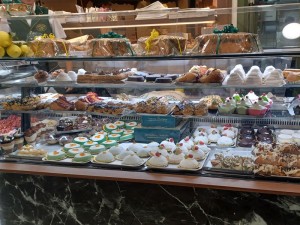
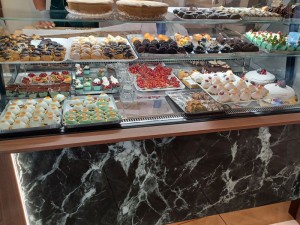
🥐 Neapolitan pastry with sfogliatella, babà and pastiera is a world-famous confectionery heritage that expresses centuries of creativity and craftsmanship.
The confectionery tradition of Naples is one of the richest, most original and universally appreciated in the world: a pastry shop with ancient roots, influenced by Arab, Spanish and French culture that has crossed the history of the Kingdom of the Two Sicilies, capable of producing desserts of extraordinary technical complexity and unforgettable flavor. The Neapolitan sfogliatella — in the two curly variants, with layered puff pastry that encloses a filling of ricotta, semolina and candied fruit, and frolla, with soft shortcrust pastry from the same filling — is perhaps the most recognizable and loved Neapolitan dessert. The rum baba, soft leavened soaked in rum syrup that swells by absorbing the liquid until it triples in volume, is a preparation of Polish origin reinterpreted by Neapolitan pastry in such a personal way that it has become a symbol. The Neapolitan pastiera, an Easter cake with cooked wheat, ricotta, orange and orange blossom, is a seasonal dessert of rare aromatic depth that every Neapolitan family prepares according to its own recipe handed down.
👉 What to do and useful tips: in Naples, try the strictly hot curly sfogliatella, just out of the oven — the crispy puff pastry still warm with the soft ricotta filling is a completely different experience than the cold version sold pre-packaged; The city's historic bakeries and pastry shops churn out sfogliatelle in the early hours of the morning, so head to the Neapolitan breakfast for the best tasting moment.
🫒 The extra virgin olive oil of Campania and the products of the Cilento peasant tradition express the Mediterranean Diet in its purest and most recognizable form.
Cilento — that vast natural and cultural area that occupies the southern part of the province of Salerno and which has been recognized as a National Park and UNESCO World Heritage Site together with the areas of Paestum and the Valley of Ancient Diano — is the symbolic heart of the Mediterranean Diet, the food model also a UNESCO heritage site that has found its purest living example in these communities. The production of Cilento PDO extra virgin olive oil, obtained mainly from the native Pisciottana variety on centuries-old olive trees that grow on coastal terraces, is one of the cornerstones of this tradition: an oil with a medium fruitiness, with herbaceous notes and a slightly spicy finish, of excellent quality and immediate territorial recognition. Alongside the oil, the white fig of Cilento DOP, traditional legumes such as the bean of Controne and the chickpea of Cicerale, the cacioricotta cilentana and the caciocavallo podolico complete a food system of extraordinary coherence and nutritional value.
👉 What to do and useful tips: visit the Cilento oil mills during the olive harvest — between October and November — to watch the milling of the Pisciottana olives and buy the freshest vintage Cilento DOP extra virgin olive oil; season with this oil a simple dish of Cilento legumes cooked in water and garlic to understand how the quality of the oil radically transforms even the humblest preparation.
🐃 Provolone del Monaco PDO and traditional cheeses from Campania preserve a dairy wisdom of great artisan and cultural value.
The dairy tradition of Campania does not end with buffalo mozzarella, however famous: the region produces a variety of artisanal cheeses of great interest, often linked to specific territories and native animal breeds of extraordinary value. Provolone del Monaco PDO, produced in the Lattari Mountains of the Sorrento Peninsula with milk from Agerolese cows — an endangered breed safeguarded thanks to this cheese — is a masterpiece of Campania seasoned spun curd: with a minimum maturation of six months and up to two years or more, it develops a spicy and persistent flavor of extraordinary complexity, with notes of hay, mountain herbs and a slight pungency that makes it unique in the Italian dairy scene. The caciocavallo podolico of inland Campania — produced with the milk of Podolica cows that graze in the wild in the Campania hinterland — and the sweet and creamy Ricotta di Bufala Campana DOP, complete a regional dairy picture of great variety.
👉 What to do and useful tips: look for provolone del Monaco PDO aged in the markets and shops of typical products of the Sorrento Peninsula and the Lattari Mountains — the version aged over 12 months develops a spiciness and aromatic complexity of great impact; pair it with a glass of Taurasi DOCG or Lacryma Christi del Vesuvio DOC for a Campania pairing of great territorial coherence and palate satisfaction.
❓ F.A.Q. - Frequently asked questions about the delicacies and excellences of Campania.
🍕 What makes Neapolitan pizza different from any other pizza in the world?
The Neapolitan pizza TSG is defined by a precise specification that establishes the use of type 00 soft wheat flour, leavening for at least eight hours, rolling out by hand without a rolling pin, cooking in a wood-fired oven at over 450 degrees for no more than 90 seconds. The result is a tall, honeycombed crust, a soft base in the center and a scent of natural leavened dough that no electric oven or industrial dough can replicate.
🧀 How do you recognize a real buffalo mozzarella from Campania PDO?
Certified buffalo mozzarella from Campania PDO bears the consortium mark on the packaging. It can be recognized by its porcelain white color, the smooth and shiny surface, the soft texture that yields to pressure releasing a slight serosity, the scent of fresh milk and lactic ferments, and the slightly acidic flavor with an aftertaste of buffalo milk. It should be consumed at room temperature, not cold from the refrigerator.
🍅 Why is the San Marzano PDO tomato so different from other tomatoes?
The volcanic soil at the foot of Vesuvius, rich in potassium and minerals, gives the San Marzano PDO tomato a natural sweetness, low acidity and a compact pulp with few seeds that make it ideal for preserves and tomato sauces. These characteristics are not replicated by cultivating the same variety in other territories, making San Marzano PDO a product closely linked to its terroir of origin.
🍋 What is the difference between the Sorrento lemon PGI and the Costa d'Amalfi lemon PGI?
The Sorrento PGI lemon, the Ovale di Sorrento variety, has a regular oval shape, thick and fragrant skin with evident veins, and an abundant and aromatic juice. The Costa d'Amalfi PGI lemon, the Sfusato Amalfitano variety, is larger, oblong in shape with a sharp apex, with a peel even richer in essential oils and a particularly intense aroma. Both are grown on coastal terraces and have superior characteristics compared to lowland lemons.
🍷 How old can a Taurasi DOCG age and when is it at its best?
Taurasi DOCG is one of the Italian wines with the greatest aging capacity thanks to the tannic structure of the Aglianico grape variety and the natural acidity. It is released on the market after a minimum of three years of aging (four for the Riserva) but expresses its best between ten and twenty years after the harvest, when the tannins soften and the bouquet develops tertiary notes of leather, tobacco, spices and dried fruit of great complexity.
🥐 What is the difference between the curly sfogliatella and the Neapolitan shortcrust pastry sfogliatella?
The curly sfogliatella is prepared with very thin and layered puff pastry, which during cooking creates the characteristic crunchy flakes visible on the surface. The sfogliatella shortcrust pastry instead has a soft shortcrust pastry wrapper. The filling is the same in both versions: ricotta, cooked semolina, sugar, eggs, orange peel and candied fruit. Curly is crunchier and requires more technical skill; The pastry is softer and more easily available.
🫒 What is the Mediterranean Diet and why is it a UNESCO World Heritage Site?
The Mediterranean Diet is a dietary model based on whole grains, legumes, vegetables, fruit, extra virgin olive oil, fish and moderate consumption of meat and dairy products. It was recognized as a UNESCO intangible cultural heritage in 2010 as a social, cultural and gastronomic practice that communities such as those of Cilento in Campania have kept alive for centuries. The recognition enhances not only health but also the agricultural system, the landscape and the culture of Mediterranean conviviality.
🐃 What is provolone del Monaco PDO and why is it called that?
Provolone del Monaco PDO is a seasoned stretched curd cheese produced in the Lattari Mountains of the Sorrento Peninsula with milk from Agerolese cows. The name 'del Monaco' probably derives from the habit of cheesemakers to cover themselves with a cloak similar to that of monks when transporting cheese to Naples on cold winter mornings, or from the tax exemption enjoyed by clergymen in the trade of products. The minimum maturation is six months and can last up to two years.
📅 What is the best time to visit Campania for its gastronomic excellence?
Spring (April-May) is ideal for asparagus, strawberries from Piana del Sele and citrus fruits. Summer brings ripe San Marzano tomatoes and artisanal preserves. Autumn is the time of olives and the milling of new oil, porcini mushrooms from Irpinia and the harvest of Taurasi. Winter is the time of the richest in fat buffalo mozzarella and the holidays with pastiera and Christmas struffoli.
📍 Which areas of Campania are the richest in gastronomic excellence?
Naples is the undisputed capital of pizza, pastry and street cuisine. The Piana del Sele and Casertano are the territories of PDO buffalo mozzarella. The Vesuvius plain produces the San Marzano PDO tomato. The Sorrento Peninsula and the Amalfi Coast are home to IGP lemons. Irpinia is the homeland of Taurasi DOCG, Fiano and Greco di Tufo DOCG. Cilento expresses the Mediterranean Diet in its purest form with DOP oil, legumes and caciocavallo podolico.
The delicacies and excellences of Campania form one of the most vital, original and universally recognized gastronomic heritages in the world, capable of combining the popular simplicity of the Neapolitan pizza UNESCO heritage site with the refinement of the great Irpinian wines such as Taurasi DOCG and Fiano di Avellino DOCG, from the freshness of the buffalo mozzarella Campana DOP to the aromatic complexity of the aged provolone del Monaco DOP, from the sweetness of the San Marzano DOP tomato to the unmistakable scent of the Sorrento IGP lemon, from the mastery of Neapolitan pastry with the sfogliatella and the rum babà to the purity of the Cilento Mediterranean Diet. Each Campania product carries with it a story of territory, community and respect for raw materials that deserves to be known and valued. On Youritaly.it you will find useful information to find your way around the gastronomic excellences of Campania, with insights into typical products, fairs, markets and food and wine itineraries that allow you to better discover this extraordinary heritage of Italian taste.